

Bodega Queirón
gravity
and the soul
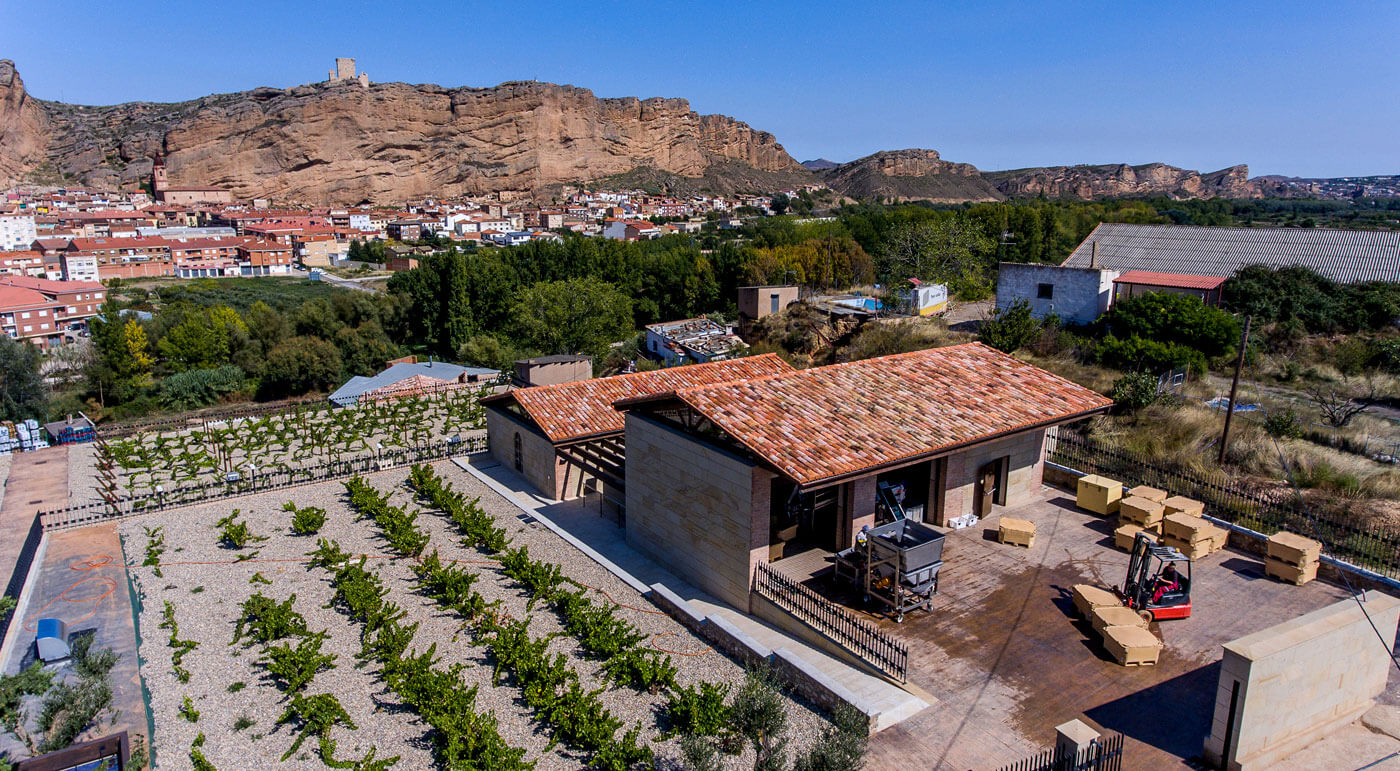
The new Queirón bodega, which the Pérez Cuevas family has spent a decade in building, is situated at the westernmost end of Quel’s historic bodegas quarter (it preserves the original classification of the quarter’s cluster of buildings with the original number nine) and has settled itself in the site of a former distillery of the family, arranged over four levels. It literally buries itself parallel to the space where for centuries they have been making the traditional caves in the hill of La Corona and maintaining the same philosophy, with their nozzles in the upper part to make use of the traditional Quel formula for the reception of the grapes. This is the basis for the steps in the winemaking process using gravity, making it possible for all the processes to be carried out extremely gently, protecting the grapes, the musts and the wines from any unnecessary handling or any mechanical pumping which could affect the quality of the wine.
That is the essence of Queirón, the painstaking care in each of the steps in the winemaking process. As in the case of the vineyards, everything that takes place in the new winery is performed with calm and the maximum respect for the grapes in order to obtain wines which fully express the territory from which they spring: Quel, Rioja Oriental, Rioja.
Gravity
as inspiration
The design of the Queirón winery is entirely down to the genius, experience and sensitivity of Gabriel Pérez and is inspired by two fundamental factors. Firstly, the historical and technical character, in which he has reinterpreted the concept of winemaking via gravity of traditional Quel bodegas and adapted it to the 21st century. For this reason, the winery facilities are physically built into the hillside in the same way as the ancient bodegas were built, with all the processes stepped at different heights from the area for the reception and selection of the clusters in the upper part, descending level by level to the vinification area, cask ageing cellar and bottle cellar, which occupies the lowest floor.
Gabriel, together with his son Rubén, (the winemaker) has brought to this architectural concept all the history which is inherent in winemaking so as to achieve total coherence with the traditions in the district and of their forefathers. The building blends perfectly into its surroundings so as not to blight the traditional landscape of the Quel Bodegas Quarter and has been equipped with all the environmental measures, both in its construction and in its energy efficiency throughout the whole year.
Artistic
inspiration
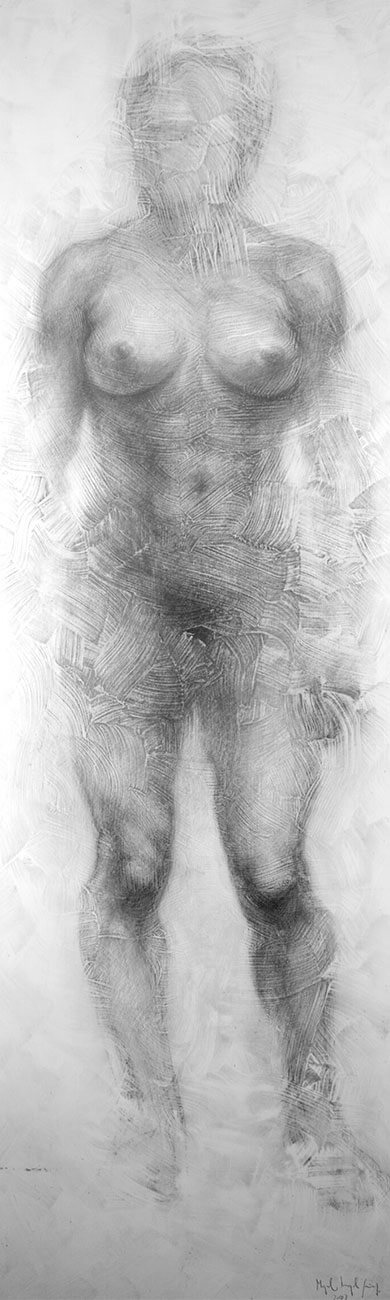
The second inspiration is the artistic aspect and this is totally related to the figure of Miguel Ángel Sáinz, the Riojan artist from Aldeanueva de Ebro (1955-2002) with whom Gabriel Pérez established an essential link in the life of both of them and who was responsible for the complete design of the Bodega Ontañón in Logroño, which from the outset he conceived as a true temple of wine.
Gabriel himself explains it thus:
“I met Miguel Ángel when I was Mayor of Quel and I asked him to collaborate in the decoration of our town. From that professional encounter a friendship was forged which changed both of our lives. Years later we embarked on the Logroño project, in which Miguel Ángel invested all his creativity, all his beliefs and his hard work. There was one aim: wine and its culture, marked above all by the two central aspects of his willingness, his religious beliefs (linked to his deep knowledge of Mythology and Egyptian Art) and his inner peace. This was all plain to see in the Logroño wine cellar, which he turned into a real shrine. In Queirón I have gathered up his forms and transferred them to the new bodega as a tribute to his figure and what it signifies for all of us”.
The Spaces of Queirón
Each space within the winery, meticulously designed, reflects a dialogue between winemaking legacy, the art of Miguel Ángel Sáinz, and a deep connection to the natural surroundings of Quel. Below is a literary summary of its spaces:
The Patio of Man welcomes visitors with a play of light and shadow, where wood and stone intertwine under the open sky. Wooden beams and geometric brick floors create an atmosphere that is warm in winter and cool in summer. At its far end, a fountain featuring Sáinz’s sculpture, Hombre histórico, evokes classicism and mythology, symbolizing the humanism of wine and the balance between nature and tradition.
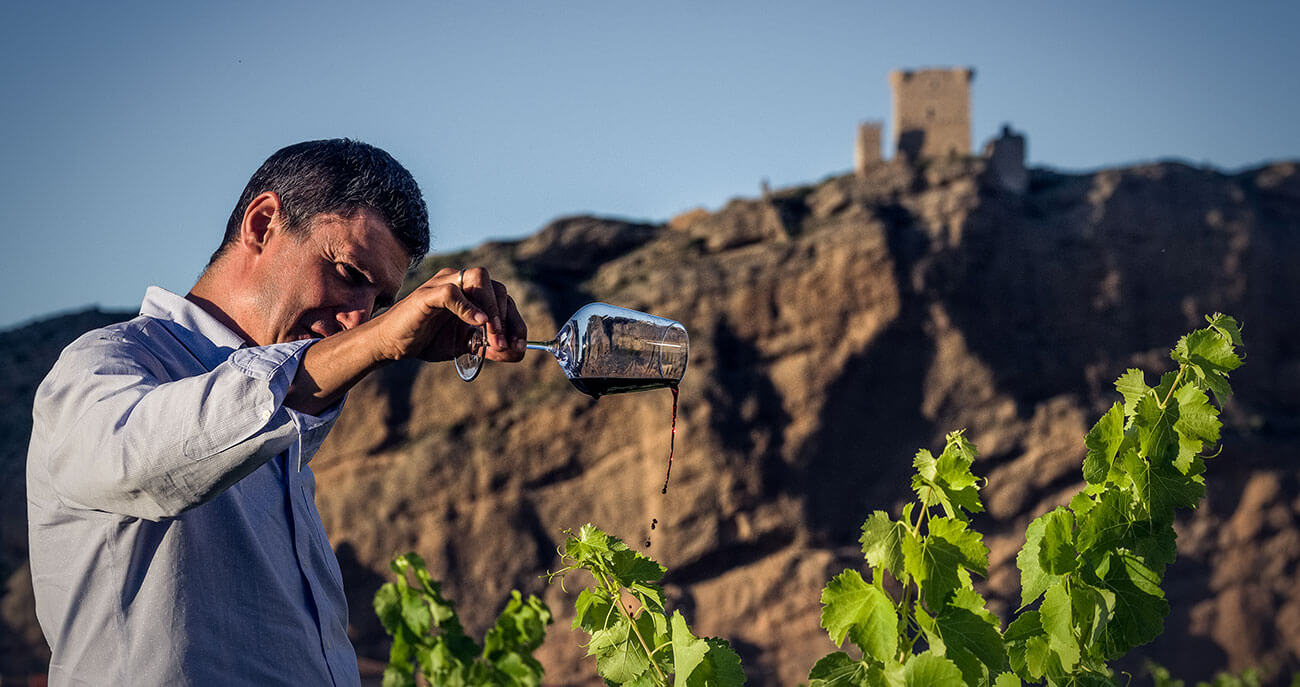
The Meeting Room, accessed through a wooden door, serves as the winery’s threshold. Its massive window reveals the imposing cliff of Quel and its rock-perched castle—a geographical spectacle that frames the entire experience. Dedicated to a short film by Sáinz, the room houses an iconic sculpture of Oenopion and the Centaur, an allegory for the union of reason and instinct. Featuring an oval wooden bar, it is a space for tasting Queirón wines, steeped in art and mythology.
The Cantilevered Staircase, a structure of wood and concrete echoing the tones of the Quel rock face, connects the Meeting Room to the production and barrel areas. More than a functional element, it symbolizes the historical cooperation between the wineries of the Quel district, bridging past and present in an elegant descent toward the winery’s core levels.
The Production Room revives the tradition of Quel’s cave-wineries, utilizing gravity for a delicate winemaking process. Grapes, selected at the top level, fall by their own weight through hatches and a central torco, avoiding mechanical pumping that could compromise quality. This system, inspired by ancient luceras (skylights), combines traditional philosophy with technological precision to ensure a gentle and natural extraction.
The Barrel Room, a temple of seclusion and darkness, pays homage to the aging process. With stone floors, brick columns, and barrels aligned in a single row, its design recalls the Ontañón Museum-Winery in Logroño. The room embraces the mountain, creating an architectural perspective that highlights the diversity of oaks and toasts essential to Queirón’s profile.
The Tasting Classroom, located adjacent to the barrels, is a luminous space overlooking the Quel cliff. Designed for 16 people, it is a place for learning and dialogue between winemakers, sommeliers, and enthusiasts, blending professional work with educational outreach.
The Bottle Cellar, at the lowest level, is a realm of calm and silence where bottles age in triangular niches and caves carved into the rock. Its design, also inspired by Sáinz, reflects the memory of the Ontañón Family, with an inner courtyard that connects the storage areas and evokes the history of Queirón’s vintages.
The Vat Hall houses truncated cone oak vats, two concrete eggs, and a clay amphora. These vessels, with their unique properties, favor a soft and complex aging, minimizing oxidation while enhancing the wine’s aromas and textures. The porosity of the concrete and clay allows for controlled micro-oxygenation, enriching the wine’s nuances.
Other Spaces complete the winery: an ampelographic garden showcasing the grape varieties of the DOCa Rioja, the Castle Patio with views of the cliff, and dining rooms for social events. However, the heart of Queirón is the Family Dining Room, an austere and symbolic space at the cellar level. Featuring a stained-glass window allegorical to Quel and verses from Carmina Burana painted on the walls, this room—untouched since 1870—embodies the roots of the Pérez Cuevas family and their commitment to the past and future of wine.
Queirón is, in essence, a tribute to tradition, art, and nature, where every space tells a story of balance, memory, and a passion for wine.

“In Queirón you
can breathe the soul of
Miguel Ángel Sáinz”