


The Queirón
Ecosystem
The Legacy of a Wise Nature. At Queirón, we believe that excellence is born from absolute respect for the environment. Guided by Leticia Pérez Cuevas, we cultivate a “constellation” of vineyards high in the Sierra de Yerga (Quel), where altitude and biodiversity define our identity. We do not seek to reinvent, but to honor ancestral traditions and the health of the land, applying minimal-intervention viticulture and precision technology to ensure each wine is a faithful reflection of its landscape. Our commitment is simple yet profound: to pass on to the next generation a land as healthy and beautiful as the one we received from our ancestors.
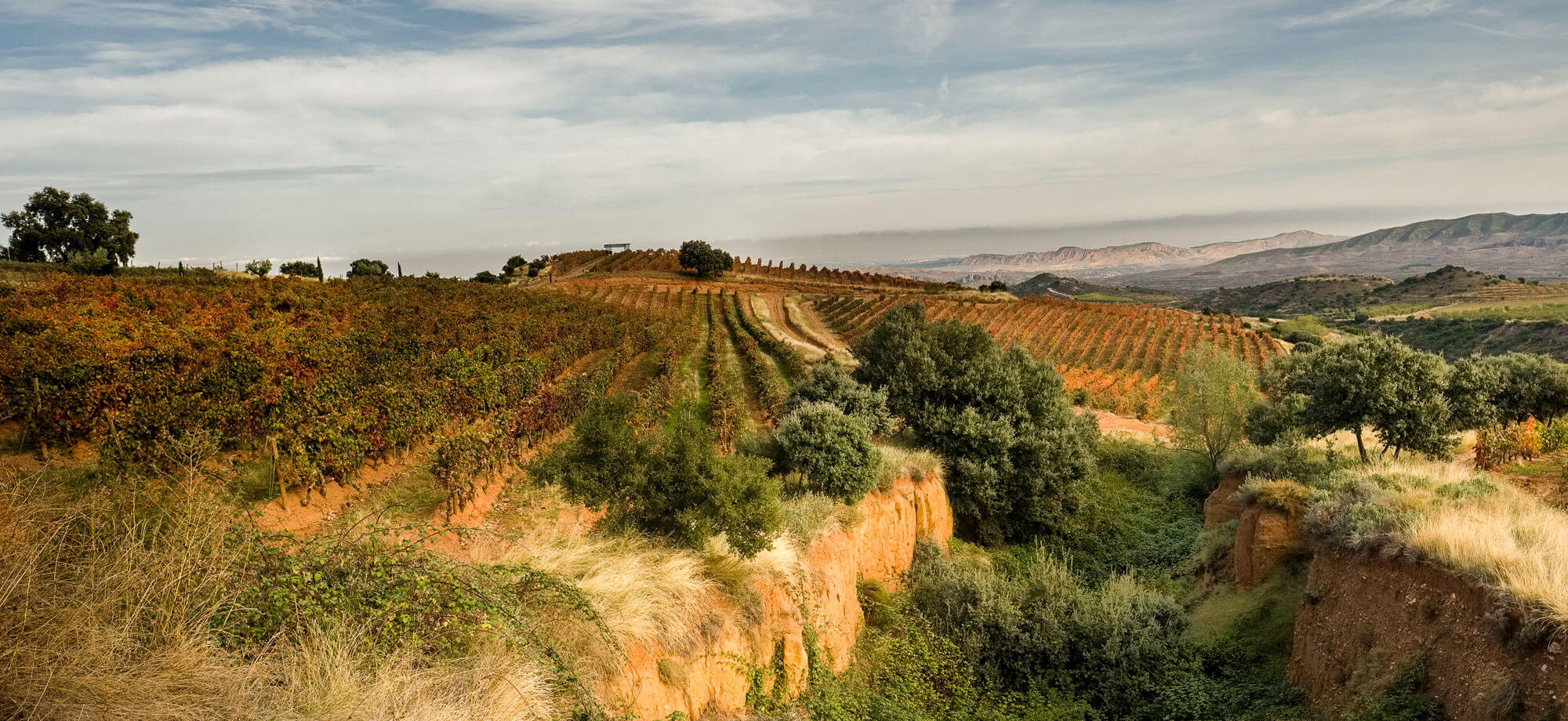
La Pasada vineyard, located on the peaks of the Sierra de Yerga in Quel. Ten hectares of Tempranillo in one of the wildest and most hidden corners of Rioja Oriental.
Ecology, sustainability means listening, understanding and respecting the land; its memory and its biodiversity, that is, the rich variety of flora and fauna. A large part of the vineyards of Bodega Queirón are certified as organically cultivated and those that are not are in the process of achieving it and are in a transition period.
Queirón understands viticulture as the knowledge of and total respect for the natural environment in which the cultivation of our vines is carried out. The person in charge of the winery’s viticulture team, Leticia Pérez Cuevas, explains the philosophy which defines her work in these Rioja vineyards:
«Our parents and grandparents decided to make wines in the Rioja Oriental, to preserve their vineyards and their lands. Maybe in those days our zone did not have the prestige it enjoys today; it’s more, in some cases it was even maligned. But they did not lose heart, far from it».
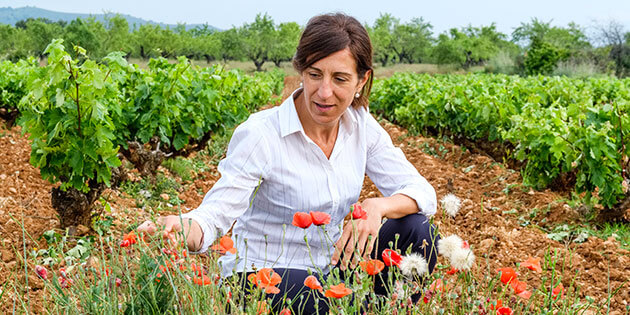
Leticia Pérez Cuevas, head of viticulture, driven by a passion for biodiversity.
The strategy of Gabriel Pérez proved vital for understanding the current panorama of the Queirón vineyards, forming the axis around which the whole philosophy of the bodega revolves. He looked for old vines and terroirs at altitude and now, a decade on, the vines of the bodega can be found in the surroundings of Quel at heights of between 600 and 800 metres, most of them in on south-facing slopes of the foothills stretching between the riverbed of the Cidacos to the highest parts of the Sierra de Yerga.
«We take advantage of our high altitude vineyards, at an altitude of between 600m and 800m, to obtain the maximum quality of the tempranillo, garnacha, graciano and tempranillo blanca», explains Leticia.
The basis for Queirón’s work in the field of Agroecology is a faithful reflection of the goals of the Symposium on Agroecology (FAO-2018).
- 1.- Preservation of soil quality
- 2.- Encouraging biodiversity
- 3.- Reduction of phytosanitary products to a minimum
- 4.- Rational management of water resources
- 5.- Development of the use of biological control
- 6.- Development of a genetic model of vine adapted as far as possible to each space
- 7.- Rational management of resources
- 8.- Rational management of energy
- 9.- Preservation of air quality
- 10.- Mitigation of and adaptation to the effects of climate change
the
height
Height is a great ally for the good health of the Queirón vineyards and one of the bodega’s strategic decisions is for all the vineyards to be organic: «Several of them are already and the ret are in a transition period which will take place over five years».
This all means that when the vines are treated to help them protect themselves against their natural enemies, in Bodegas Queirón we systematically use products which have not been chemically synthesised in a laboratory or genetically modified. The treatments are made using elements which are present in nature in an innate way. In this way we achieve two goals, we respect the environment of our surroundings to the maximum and, in addition, protect the properties of the land by helping the ecosystem to generate natural immunity and offering greater quality to the grapes.
In the vineyards which are in transition towards becoming one hundred percent organic, we apply integrated pest control using sexual confusion techniques (placing diffusers which emit the grape moth’s female sex pheromone among the vines. The male is unable to locate a mate due to the quantity of pheromones in the atmosphere and the female, not having been fertilised, lays no eggs and so there will be no larvae to bore into the grape berries. There is no second or third generation of clusters and far less risk of botrytis as there are no damaged berries).
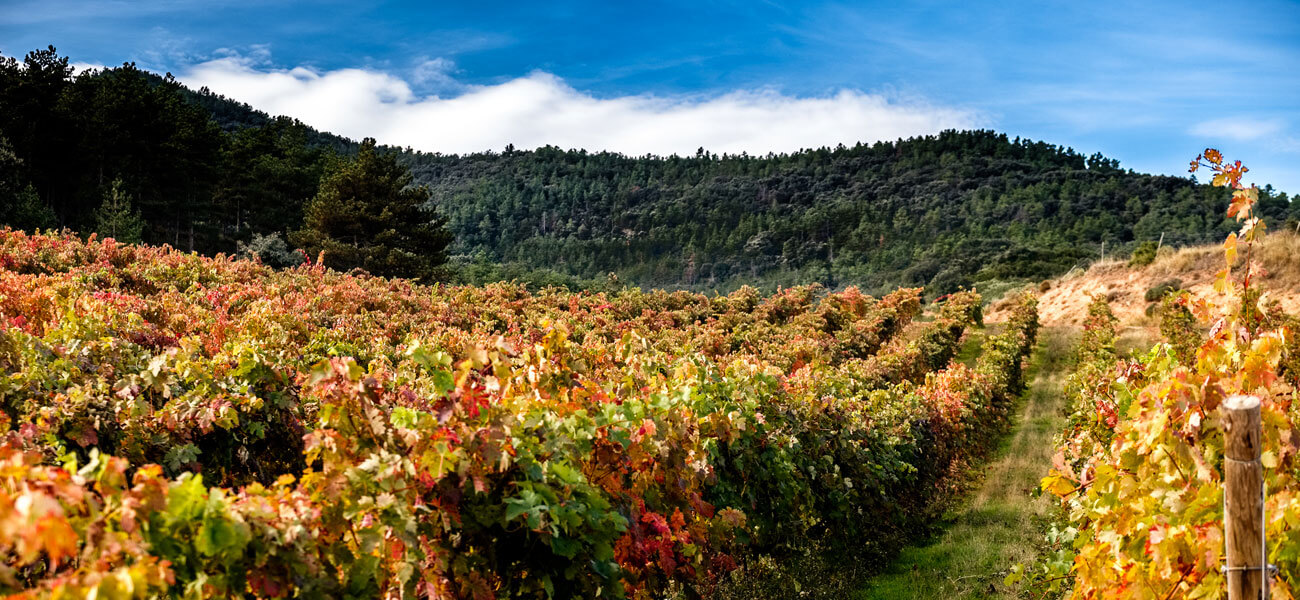
A commitment to sustainable vineyards and their surroundings lies at the heart of Queirón’s philosophy.
Another important practice in the Queirón field work is allowing spontaneous plant cover to grow, a strategy which helps to reduce erosion of the soil as a result of rainfall, as well as providing nutrients and organic material. This, in turn, encourages the washing of the nutrients in the soil itself allowing them to be absorbed better, improving its structure and also strengthening its microbial qualities. Other benefits of the plant cover are that it creates a competition of these plants with the vines and makes their growth less vigorous.
As Leticia Pérez Cuevas explains, the soil is vital in the philosophy of the work in the vineyards of the Bodega Queirón: «We understand that the soil and its biodiversity form the basis of the pyramid of the life of our vineyards, so we look after the soil by analysing its characteristics in depth, reducing tilling and allowing spontaneous plant cover to develop».
Several of the nutrients which are incorporated into the soils come from mulch from mushrooms and fungi from nearby composting plants. Thus two goals can be achieved, the reuse of that material and the care of our soils with top quality organic matter.
Another aspect is that in our vineyards allow wild fauna and cattle to live alongside each other so that during the winter months they can feed themselves on the grass and the organic waste of the vines themselves.
All these kinds of processes (especially the provision of the necessary organic matter for the vines and the plant cover) help give rise to a limit on the vigour of the growth of the vines so that it is not necessary to pinch or tip the
An
Moreover, Bodegas Queirón maintains over fifty hectares of pine trees to reduce their carbon footprint to a minimum, prevent erosion and desertification of lands which would otherwise be abandoned. The bodega has also made a firm commitment to solar power, precision agriculture and zero waste.
As Leticia sums up, «we don’t want to reinvent what has already been invented; we believe in the ways of doing things of the growers of our town, their tradition of respect for nature and the ancestral ways of doing things. Our goal
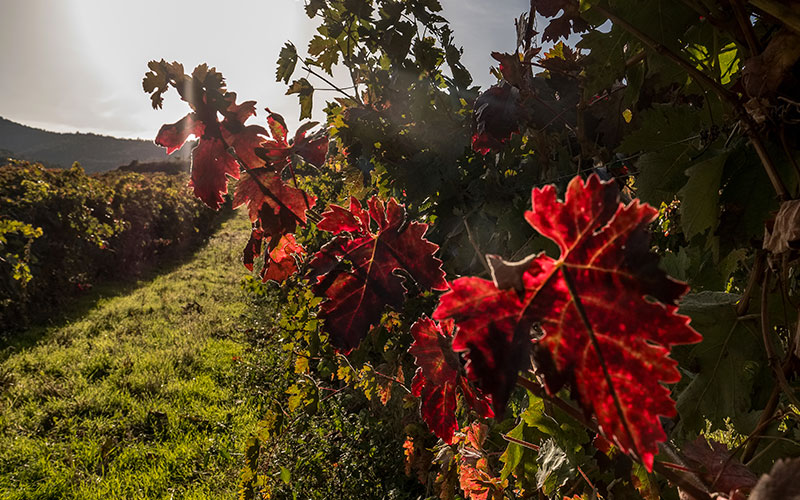
Natural cover crops in one of the Queirón winery vineyards.
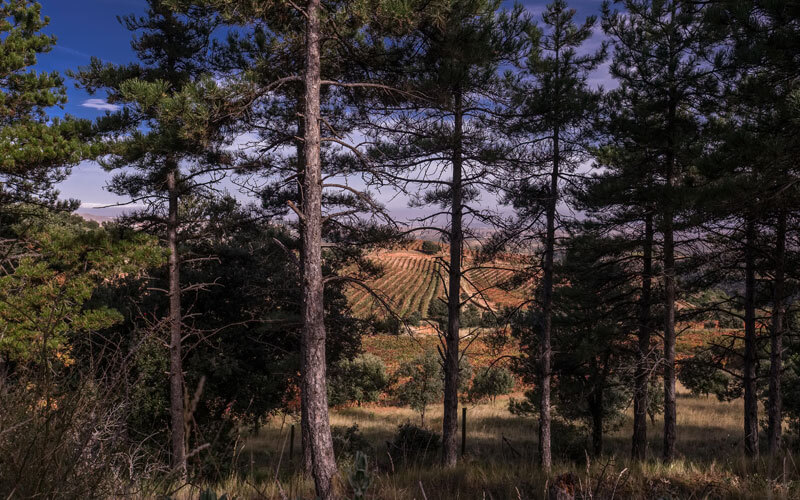
The management of each vineyard is defined by the singularity of its specific environment.