




The allegory
of Quel
our town
There among the golden harvest,
gently waving, Zephyr,
The shy quail continues to sing
its joyful song
‘Mi Lugar’.
The wine of the village
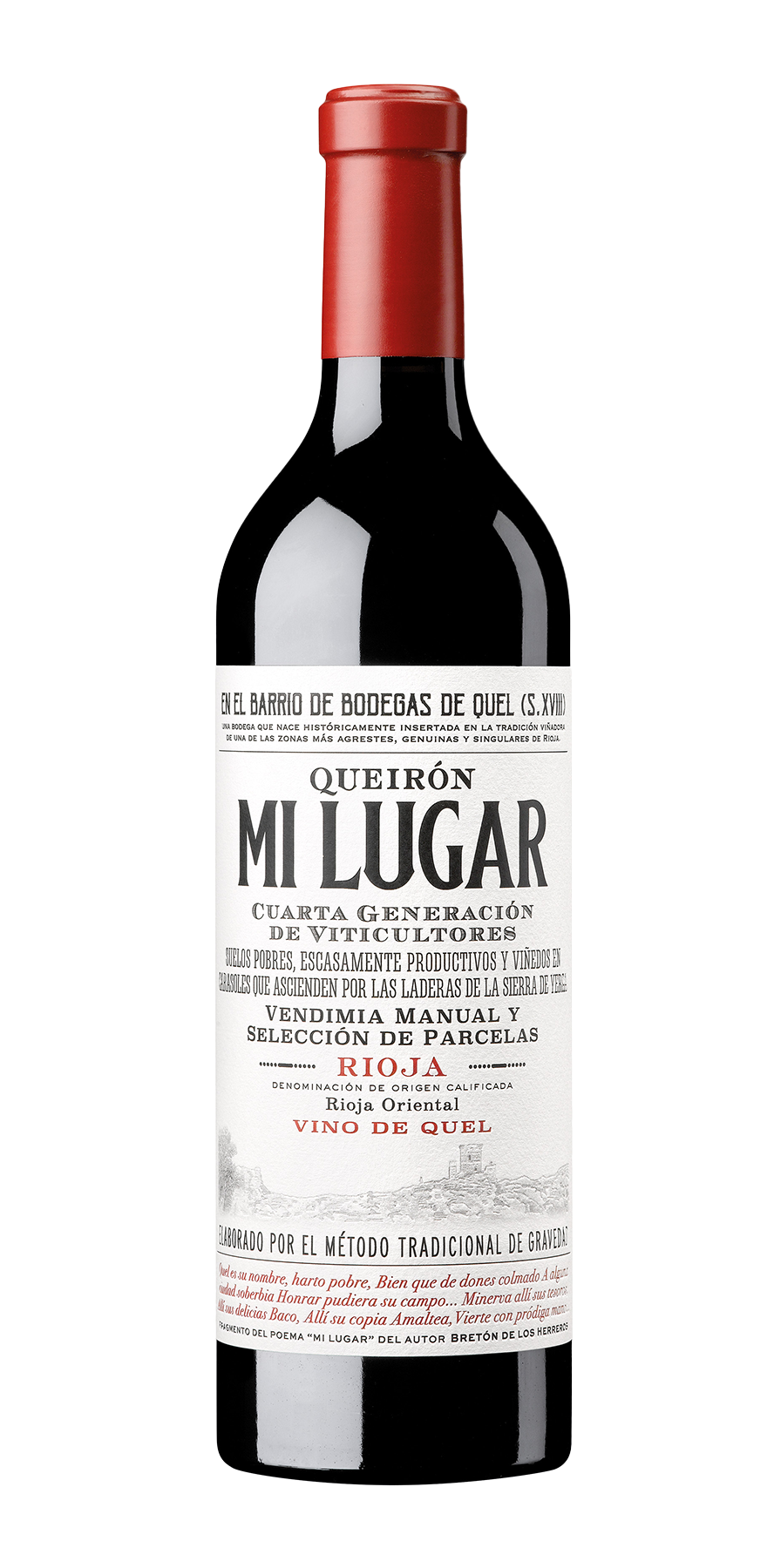
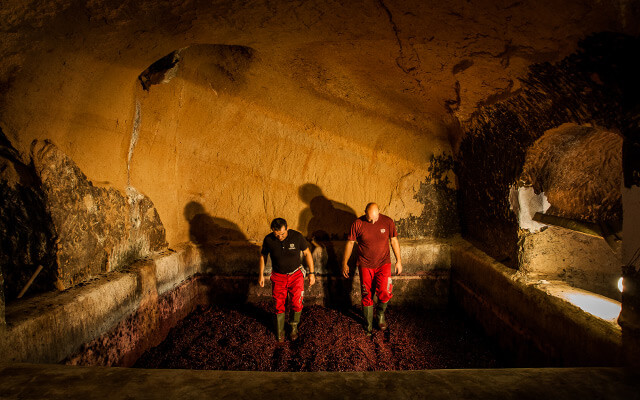
Mi Lugar was created as a shining tribute to the tradition which the Pérez Cuevas family has been working to restore. The wine of Quel: genuine, proud and noble comes from a selection of small plots where only the best grapes are harvested and delivered to the winery of Queirón, which represents the ninth cave in a neighborhood full of Dionysus worshippers. A structure that stands as an homage to the traditional and hardworking townsfolk of Quel, immortalized through the words of the poet Don Manuel in his poem “Mi Lugar”, or “My Place”.
Bacchus graces us
with his delights
Quel is its name, full of the poor;
but replete with gifts (…)
Minerva there with her treasures and
Bacchus there with his earthly delights
‘Mi Lugar’.
… and its
temples
2021 VINTAGE: PHENOLIC PRECISION
The 2021 vegetative cycle began with a cold, wet winter, ensuring optimal field capacity and hydrological reserves. Despite spring frosts in the lower reaches of Rioja Oriental, a temperate summer allowed for a slow, progressive synthesis of flavonoids. The timely September rains acted as a “climatic catalyst,” ensuring perfect synchronic ripeness (the alignment of technological, phenolic, and aromatic maturity). The result is a vintage of structural power and chromatic intensity. While the regional TPI (Total Polyphenol Index) averaged 60, Queirón’s Yerga estates reached 75, with high-altitude parcels like La Pasada peaking at 83—levels typically reserved for “Grand Cru” structures.
EDAPHOLOGY AND VITICULTURE: THE STRUGGLE FOR TERROIR
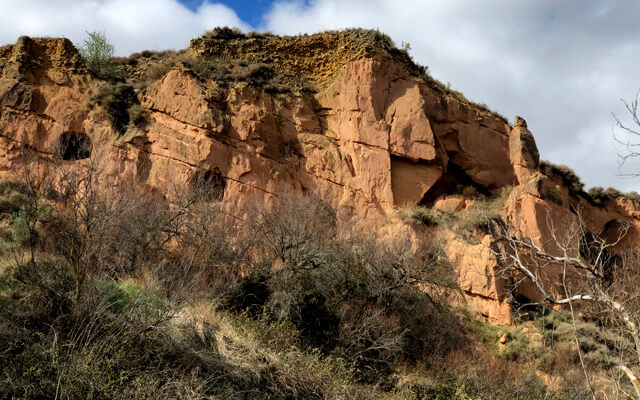
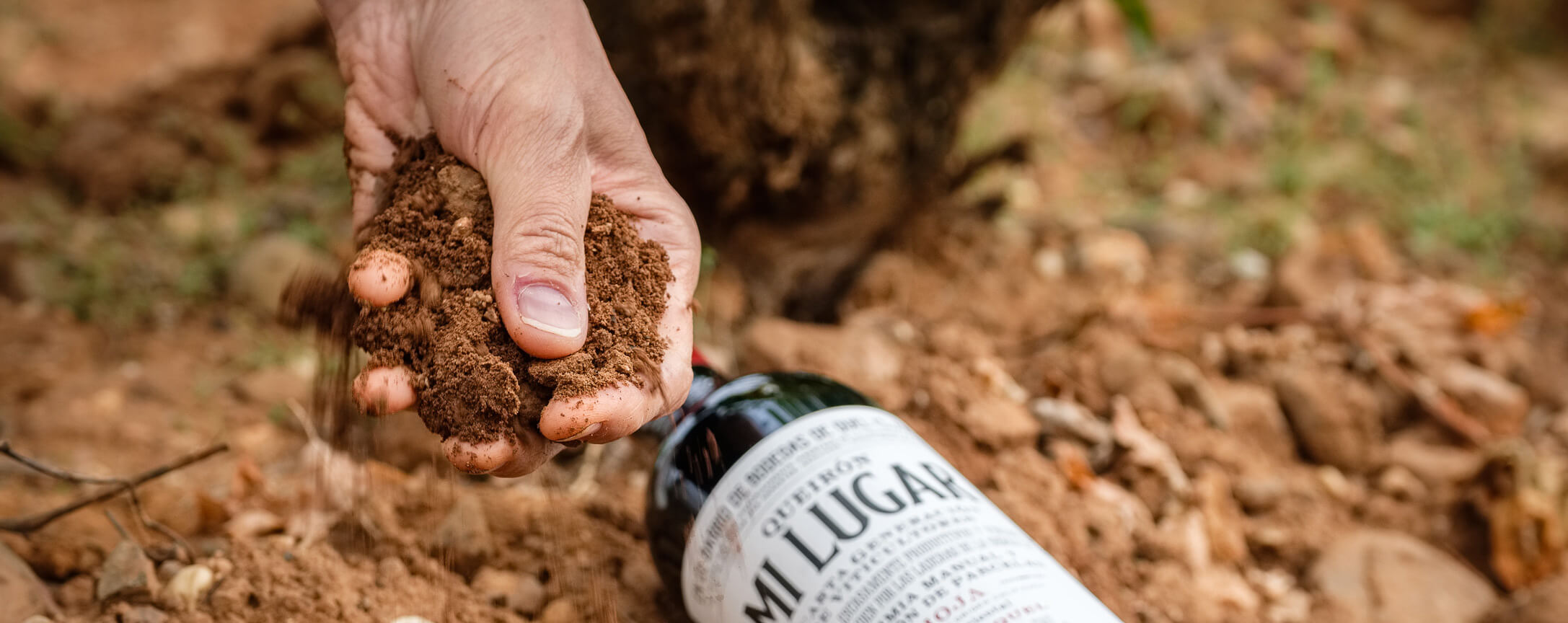
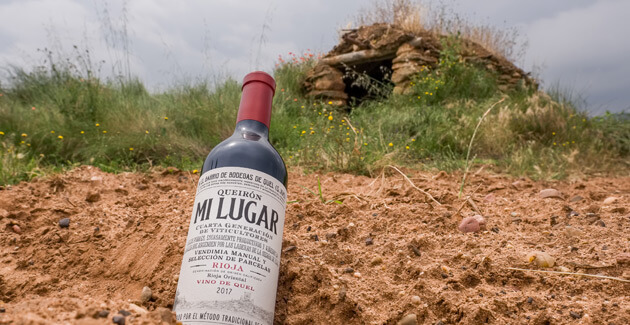
The plots for Mi Lugar are defined by their lithological complexity. These are poor, high-drainage soils of alluvial and colluvial origin, characterized by a matrix of limestone and sand interspersed with quartzite river stones (galets).
This stony architecture forces the root systems to penetrate deep into the subsoil in search of nutrients, a stress factor that naturally limits vigor. This “struggle” results in:
-
Morphology: Shot-sized berries with a high skin-to-juice ratio.
-
Organoleptic Profile: A distinct sapidity and a vertical mineral tension—reminiscent of dry clay and petrichor—driven by the soil’s mineral wealth.
-
Management: The vines are head-trained (en vaso), 40-65 years old, and strictly dry-farmed. With yields restricted to 20-25 hl/ha (3,000–4,000 kg/ha), the plant concentrates its entire metabolic energy into phenolic quality rather than biomass.
PRECISION ENOLOGY AND ÉLEVAGE
To preserve the integrity of the terroir, the winemaking follows a non-interventionalist, gravity-led protocol:
-
Optical & Manual Selection: A rigorous triple-triage system (vineyard, cluster, and individual berry) ensures that only pristine fruit enters the vats.
-
Vinification: Gravity-flow movement eliminates the need for mechanical pumps, preventing the extraction of “green” or bitter tannins from the seeds. An extended cold soak (pre-fermentative maceration) precedes a controlled fermentation (22–26°C) to maximize anthocyanin stability.
-
Wood Management & Polymerization: * Malolactic Fermentation (MLF): Conducted in new French oak to integrate lactic notes and stabilize color from the earliest stage.
-
Aging: 18 months in a bespoke selection of cooperage (80% French, 20% American). The diversity of toast levels is designed to complement the wine’s structure without masking its fruit profile.
-
Refinement: The process culminates in large oak foudres (tinas) for an additional 6 months. This stage promotes gentle micro-oxygenation and tannin polymerization, rounding out the palate and enhancing the wine’s longevity and “savoir-faire” before bottling.
-

vintage
Technical data




TASTE NOTE
Taste note 2021PREVIOUS VINTAGES
Taste note 2020 Taste note 2019 Taste note 2018 Taste note 2017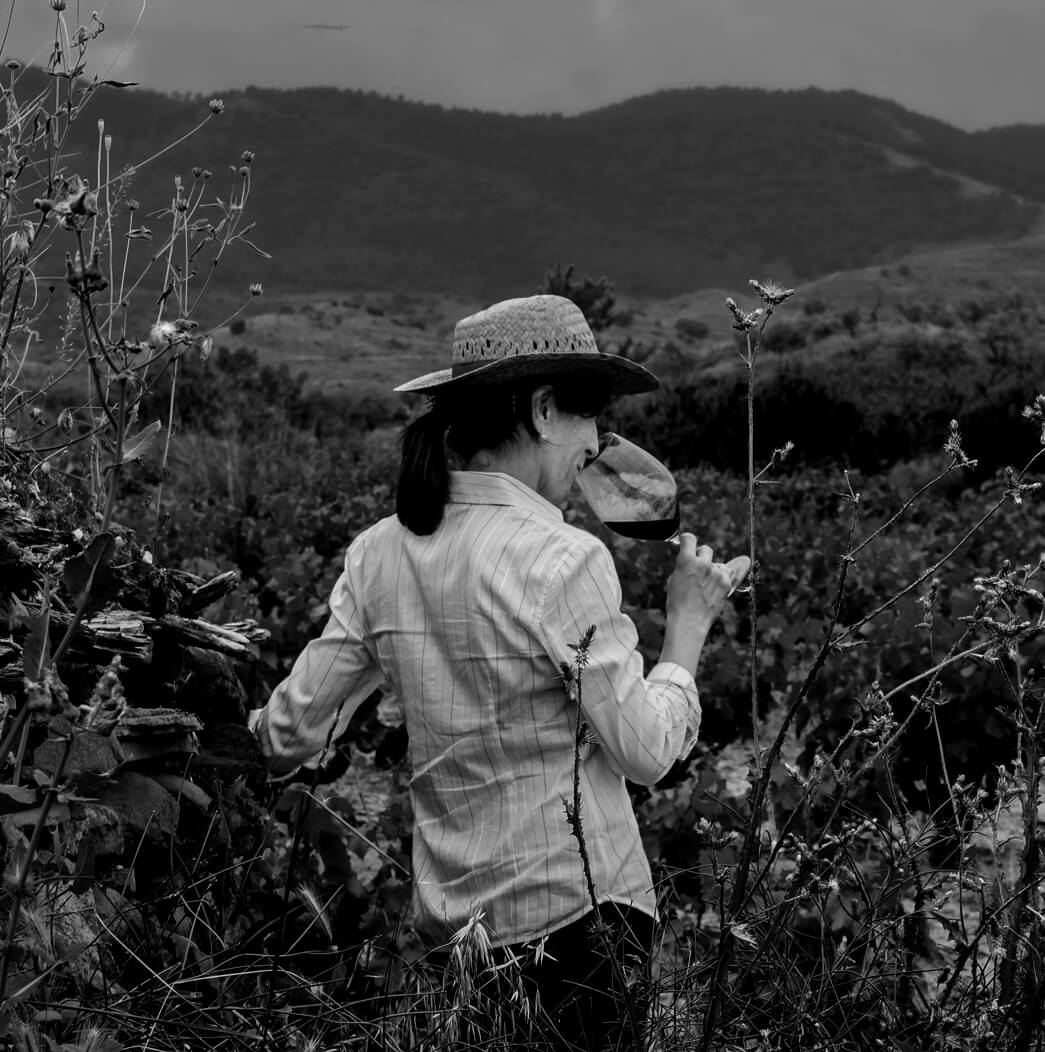
travel notes
on Mi Lugar
from the hands of
Leticia Pérez Cuevas
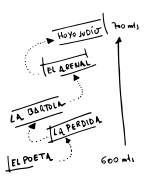
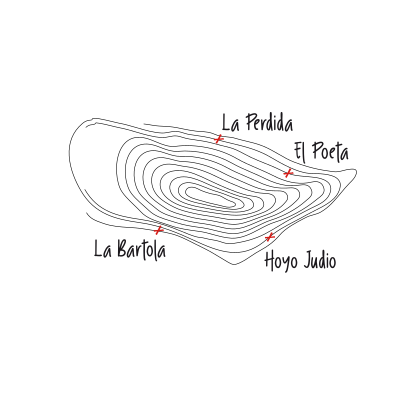
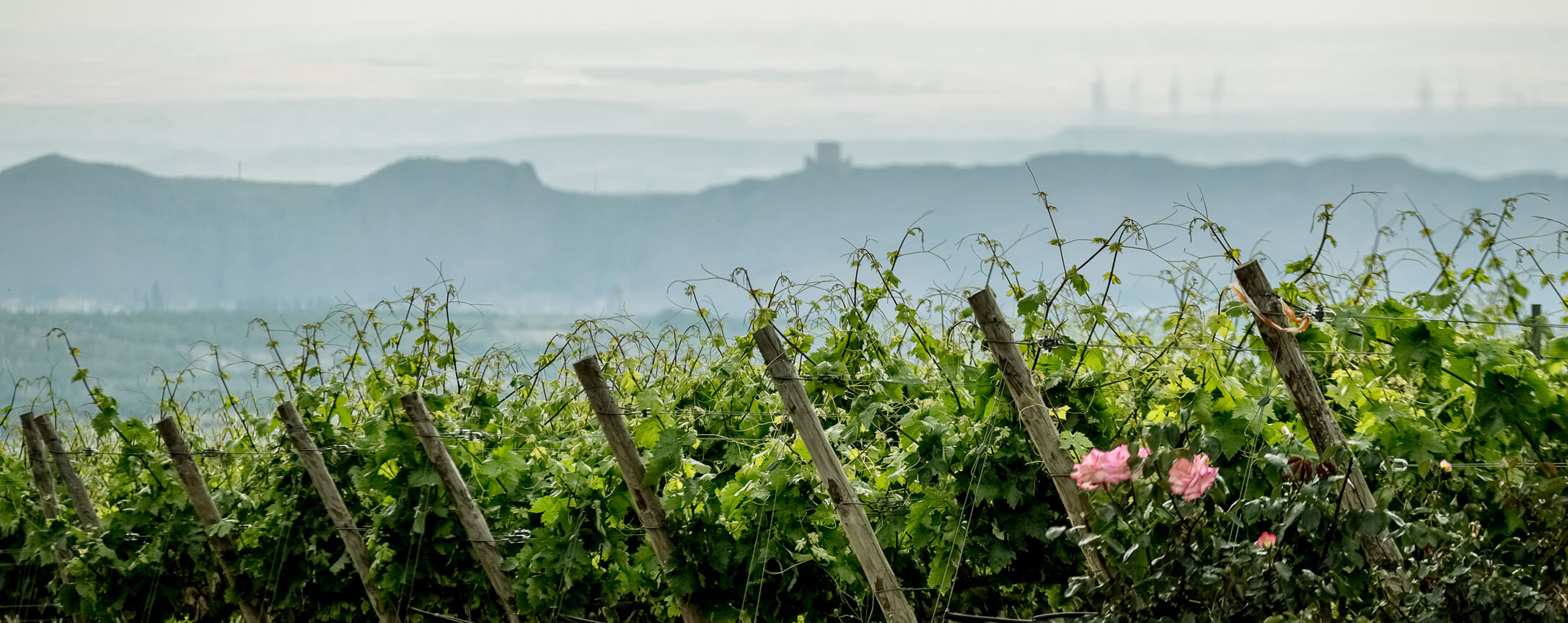
These vines are planted in the bushtrained – “en vaso”, or Gobelet style. Our Mi Lugar cuvée is a selection of the best Garnacha grapes from the vineyards of El Poeta, La Bartola and La Perdida and the best Tempranillo grapes from El Arenal and Hoyo Judío. To discover Mi Lugar is to delve into the essence of the Cidacos Valley, one of the most little known and yet genuine landscapes of the Rioja Oriental subregion. The valley is marked by geological upheavals (phenomenas) that date back some 250 million years before our era, which define the orographic profiles and soil characteristics of these vineyards.
It is here where we become intimately familiar with the character of each of these parcels which are tended to and guided by the hand of Leticia Perez Cuevas, engineer of the European Space Agency (ESA), and the family’s vineyard manager par excellence. Leticia is in love with the biodiversity of the Queirón vineyards, which she dotes upon 365 days a year and through which she conducts herself as if in the courtyard of her very own home.
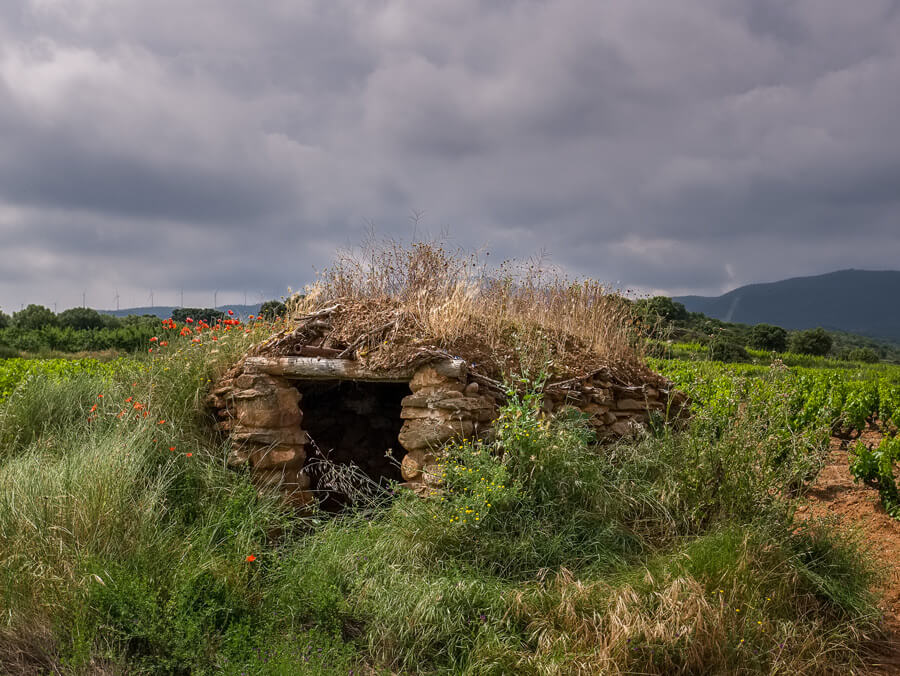
These are moments of extreme beauty and are her favorite times of day to roam this unique enclave while inspecting the buds and eventual ripening of fruit. The vines of ‘La Bartola’ are old, proud, powerful and hold great stature. The landscape is also identified by numerous “morgones”, otherwise known as a method in Rioja viticulture where canes from adjacent vines are dug into the soil, creating a new plant from the vineyard’s oldest vines. Leticia stresses that those on this farm are very well trained and vigorously resist hot summers and require no additional water, other than what is naturally absorbed by the earth, during the low rainfall of the spring season. The soil of ‘La Bartola’ is arid, sandy and with few stones. The soil here is dried and cracked. These heavenly Garnacha vines are brave and offer intense colour, aroma and incredible finesse
La Bartola are old,
proud, upright and powerful….
that the Tempranillo
in this part of Rioja
is the height of excellence.
The sand on the ground is dotted with stones and river rocks and Leticia underlines the importance of the local winds: “The air does not stop to move here and is synonymous with the health of the vines throughout the year. It is our greatest blessing”. These plots were planted at the end of the road and some of them have gradually been giving way each year, shrinking more than half a meter from their original location.
It is our
greatest blessing
vino
de Quel
Chefe
Paniego
Sommelier at Portal del Echaurren
Ezcaray La Rioja
(two Michelin stars)
National Award of Gastronomy for the Best Head of House or
Maitre D.
Remales
de amapolas
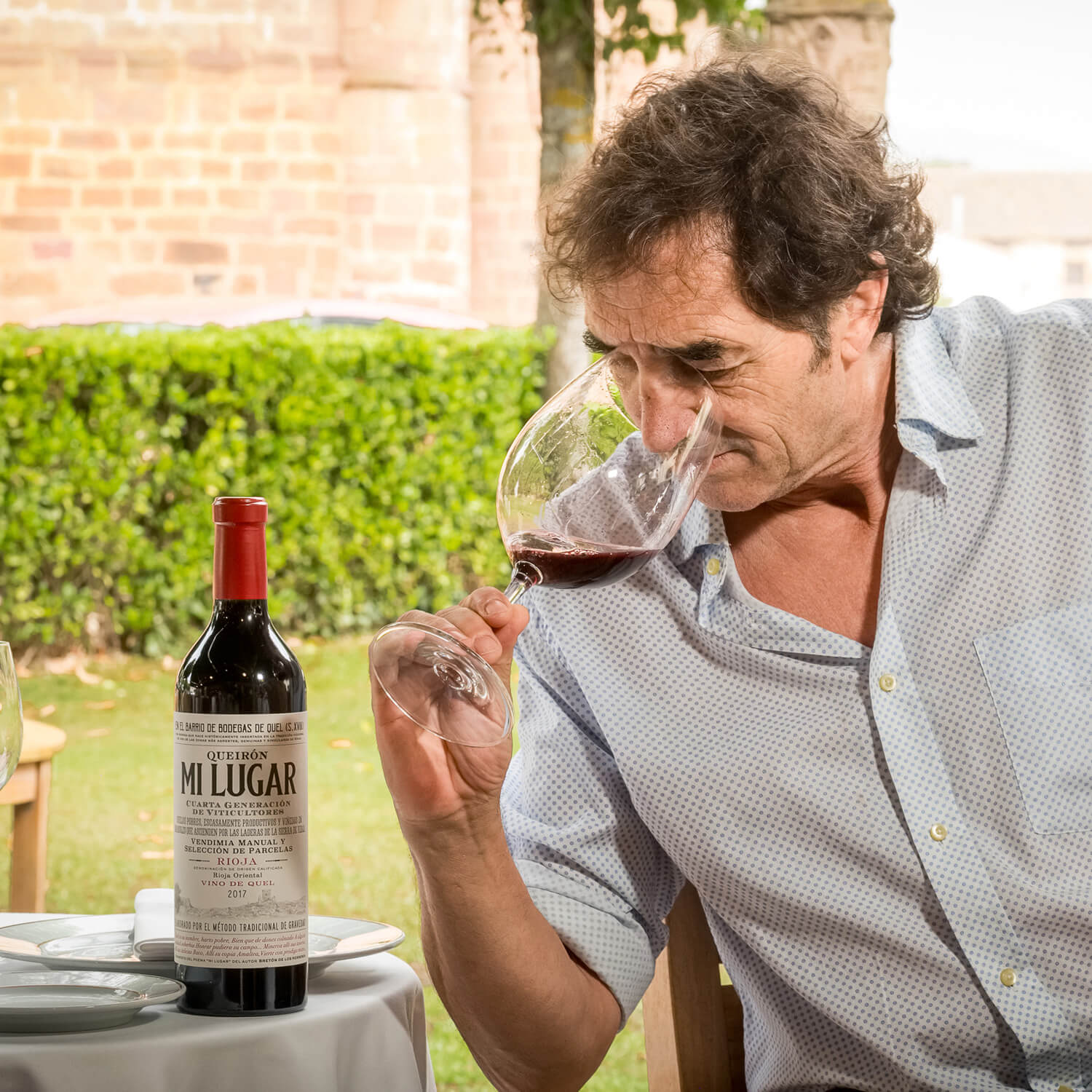
Mi Lugar is a promise of hope. When served in the glass, it explodes with aromas of red fruit and freshly picked cherries, has refreshing acidity and displays light toast and a touch of sali- nity that is reminiscent of of the Medi- terranean. Its lingering aromatics leave an impression of flowers, a field of ash and poppy branches. It is a wine that envelops the mouth. Fullness of flavor develops over time. We like to describe Mi Lugar as a young man full of meaning and determination. The years will certainly be its best ally. A great wine, its finish becomes silky and softens without losing its nerve. Is this the result of its soil that suffers and de- livers length in the mouth?
Mi Lugar Tempranillo Blanco
2021
inspiration
El Arca
2020
An ancestral journey

Queirón de Gabriel
2011
Gabriel´s dream
Ensayos Capitales
2018
Challenging the limits
Ensayos Capitales Nº3
2020
Asoleao